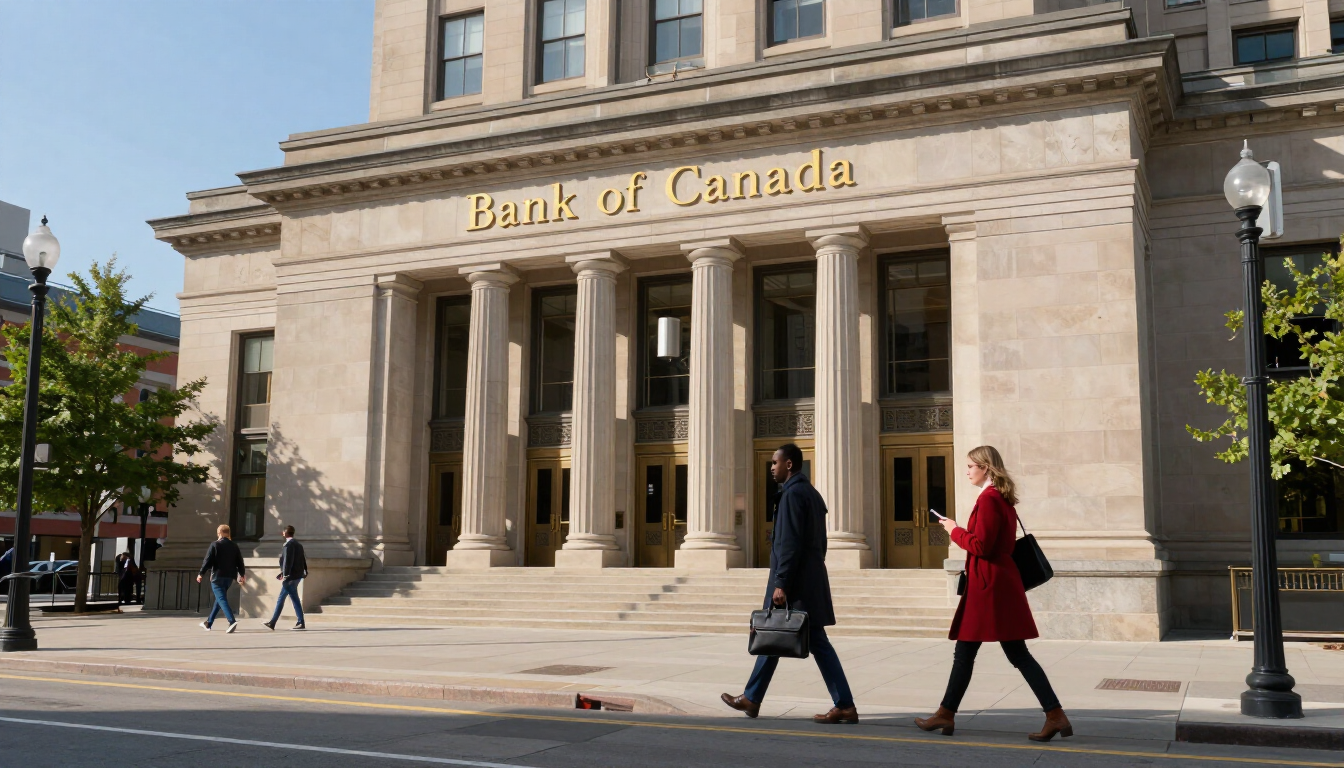
Bank of Canada Rate Announcement Dec 10th, 2025

Cari McClelland • December 10, 2025

Bank of Canada maintains policy rate at 2.1/4%.


FOR IMMEDIATE RELEASE

Media Relations

Ottawa, Ontario

December 10, 2025


The Bank of Canada today held its target for the overnight rate at 2.25%, with the Bank Rate at 2.5% and the deposit rate at 2.20%.


Major economies around the world continue to show resilience to US trade protectionism, but uncertainty is still high. In the United States, economic growth is being supported by strong consumption and a surge in AI investment. The US government shutdown caused volatility in quarterly growth and delayed the release of some key economic data. Tariffs are causing some upward pressure on US inflation. In the euro area, economic growth has been stronger than expected, with the services sector showing particular resilience. In China, soft domestic demand, including more weakness in the housing market, is weighing on growth. Global financial conditions, oil prices, and the Canadian dollar are all roughly unchanged since the Bank’s October Monetary Policy Report (MPR).


Canada’s economy grew by a surprisingly strong 2.6% in the third quarter, even as final domestic demand was flat. The increase in GDP largely reflected volatility in trade. The Bank expects final domestic demand will grow in the fourth quarter, but with an anticipated decline in net exports, GDP will likely be weak. Growth is forecast to pick up in 2026, although uncertainty remains high and large swings in trade may continue to cause quarterly volatility.


Canada’s labour market is showing some signs of improvement. Employment has shown solid gains in the past three months and the unemployment rate declined to 6.5% in November. Nevertheless, job markets in trade-sensitive sectors remain weak and economy-wide hiring intentions continue to be subdued.


CPI inflation slowed to 2.2% in October, as gasoline prices fell and food prices rose more slowly. CPI inflation has been close to the 2% target for more than a year, while measures of core inflation remain in the range of 2½% to 3%. The Bank assesses that underlying inflation is still around 2½%. In the near term, CPI inflation is likely to be higher due to the effects of last year’s GST/HST holiday on the prices of some goods and services. Looking through this choppiness, the Bank expects ongoing economic slack to roughly offset cost pressures associated with the reconfiguration of trade, keeping CPI inflation close to the 2% target.


If inflation and economic activity evolve broadly in line with the October projection, Governing Council sees the current policy rate at about the right level to keep inflation close to 2% while helping the economy through this period of structural adjustment. Uncertainty remains elevated. If the outlook changes, we are prepared to respond. The Bank is focused on ensuring that Canadians continue to have confidence in price stability through this period of global upheaval.


Information note

The next scheduled date for announcing the overnight rate target is January 28, 2026. The Bank’s next MPR will be released at the same time.


Cari McClelland
GET STARTED
By Cari McClelland February 25, 2026
Your Guide to Real Estate Investment in Canada Real estate has long been one of the most popular ways Canadians build wealth. Whether you’re purchasing your first rental property or expanding an existing portfolio, understanding how real estate investment works in Canada—and how it’s financed—is key to making smart decisions. This guide walks through the fundamentals you need to know before getting started. Why Canadians Invest in Real Estate Real estate offers several potential benefits as an investment: Long-term appreciation of property value Rental income that can support cash flow Leverage , allowing you to invest using borrowed funds Tangible asset with intrinsic value Portfolio diversification beyond stocks and bonds When structured properly, real estate can support both income and long-term net worth growth. Types of Real Estate Investments Investors typically focus on one or more of the following: Long-term residential rentals Short-term or vacation rentals (subject to local regulations) Multi-unit residential properties Pre-construction or assignment purchases Value-add properties that require renovations Each type comes with different financing rules, risks, and return profiles. Down Payment Requirements for Investment Properties In Canada, investment properties generally require higher down payments than owner-occupied homes. Typical minimums include: 20% down payment for most rental properties Higher down payments may be required depending on: Number of units Property type Borrower profile Lender guidelines Down payment source, income stability, and credit history all play a role in approval. How Rental Income Is Used to Qualify Lenders don’t always count 100% of rental income. Depending on the lender and mortgage product, they may: Use a rental income offset , or Include a percentage of rental income toward qualification Understanding how income is treated can significantly impact borrowing power. Financing Options for Investors Investment financing can include: Conventional mortgages Insured or insurable options (in limited scenarios) Alternative or broker-only lenders Refinancing equity from existing properties Purchase plus improvements for value-add projects Access to multiple lenders is often crucial for investors as portfolios grow. Key Costs Investors Should Plan For Beyond the purchase price, investors should budget for: Property taxes Insurance Maintenance and repairs Vacancy periods Property management fees (if applicable) Legal and closing costs A realistic cash-flow analysis is essential before buying. Risk Considerations Like any investment, real estate carries risk. Key factors to consider include: Interest rate changes Market fluctuations Tenant turnover Regulatory changes Liquidity (real estate is not easily sold quickly) A strong financing structure can help manage many of these risks. The Role of a Mortgage Professional Investment mortgages are rarely “one-size-fits-all.” Lender policies vary widely, especially as you acquire more properties. Working with an independent mortgage professional allows you to: Compare multiple lender strategies Structure financing for long-term growth Preserve flexibility as your portfolio evolves Avoid costly mistakes early on Final Thoughts Real estate investment in Canada can be a powerful wealth-building tool when approached with a clear strategy and proper financing. Whether you’re exploring your first rental property or planning your next acquisition, understanding the numbers—and the lending landscape—matters. If you’d like to discuss investment property financing, run the numbers, or explore your options, feel free to connect. A well-planned mortgage strategy can make all the difference in long-term success.
By Cari McClelland February 18, 2026
Buying your first home is a big deal. And while you may feel like you’re ready to take that step, here are 4 things that will prove it out. 1. You have at least 5% available for a downpayment. To buy your first home, you need to come up with at least 5% for a downpayment. From there, you’ll be expected to have roughly 1.5% of the purchase price set aside for closing costs. If you’ve saved your downpayment by accumulating your own funds, it means you have a positive cash flow which is a good thing. However, if you don’t quite have enough saved up on your own, but you have a family member who is willing to give you a gift to assist you, that works too. 2. You have established credit. Building a credit score takes some time. Before any lender considers you for mortgage financing, they want to see that you have an established history of repaying the money you’ve already borrowed. Typically two trade lines, for a period of two years, with a minimum amount of $2000, should work! Now, if you’ve had some credit issues in the past, it doesn’t mean you aren’t ready to be a homeowner. However, it might mean a little more planning is required! A co-signor can be considered here as well. 3. You have the income to make your mortgage payments. And then some. If you’re going to borrow money to buy a house, the lender wants to make sure that you have the ability to pay it back. Plus interest. The ideal situation is to have a permanent full-time position where you’re past probation. Now, if you rely on any inconsistent forms of income, having a two-year history is required. A good rule of thumb is to keep the costs of homeownership to under a third of your gross income, leaving you with two-thirds of your income to pay for your life. 4. You’ve discussed mortgage financing with a professional. Buying your first home can be quite a process. With all the information available online, it’s hard to know where to start. While you might feel ready, there are lots of steps to take; way more than can be outlined in a simple article like this one. So if you think you’re ready to buy your first home, the best place to start is with a preapproval! Let's discuss your financial situation, talk through your downpayment options, look at your credit score, assess your income and liabilities, and ultimately see what kind of mortgage you can qualify for to become a homeowner! Please connect anytime; it would be a pleasure to work with you!