Bank of Canada Holds Rate at 2.25% — April 29, 2026

Cari McClelland • April 29, 2026

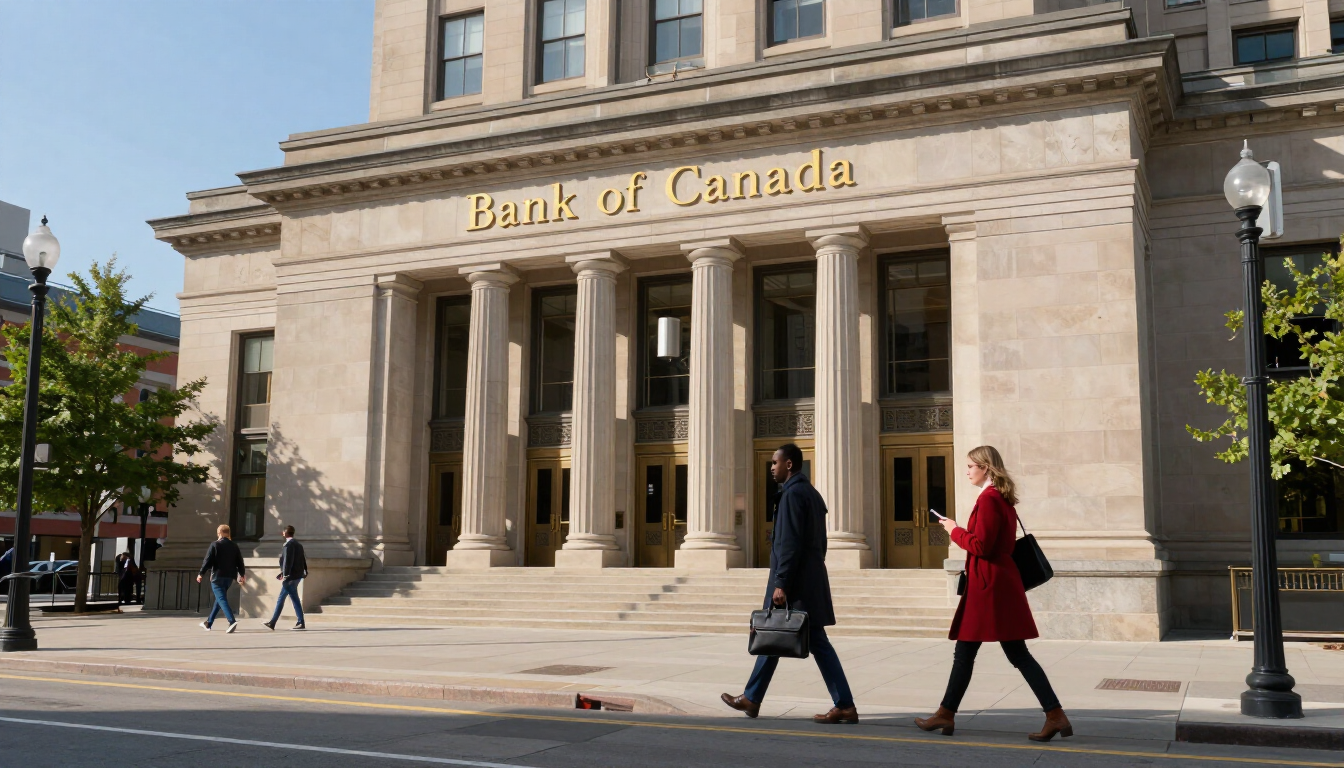
The Bank of Canada announced today that it is holding its target for the overnight rate at 2.25%, with the Bank Rate at 2.5% and the deposit rate at 2.20%. This decision comes against a backdrop of significant global uncertainty — and for Canadian homeowners, buyers, and anyone with a mortgage coming up for renewal, here's what it means.

What the Bank of Canada Said

A World Under Pressure

The Bank cited two major forces shaping today's decision: the ongoing conflict in the Middle East and continued uncertainty around U.S. trade policy. The Iran war has pushed energy prices sharply higher and disrupted transportation routes, squeezing oil-importing economies and pushing inflation up globally. Meanwhile, U.S. tariffs and shifting trade patterns continue to create headwinds for Canadian businesses and exporters.

Financial markets have been volatile, reflecting daily developments in the Middle East. Bond yields are modestly higher since January, and the U.S. dollar has strengthened against most major currencies — though the Canada-U.S. exchange rate has remained relatively stable.

The Canadian Economy

Canada's economy contracted in the fourth quarter of 2025, but growth is forecast to have resumed in early 2026. Consumer and government spending are providing support, while tariffs and trade uncertainty are weighing on exports and business investment. Housing activity has also declined, held back by slow population growth, economic uncertainty, and affordability challenges.

The labour market remains soft. Employment growth has been subdued over the past year, with job losses in sectors targeted by U.S. tariffs. The unemployment rate is sitting in the 6.5% to 7% range.

The Bank's April forecast projects GDP growth of 1.2% in 2026, rising to 1.6% in 2027 and 1.7% in 2028 as exports and business investment gradually recover.

Inflation

CPI inflation climbed to 2.4% in March, driven largely by higher gasoline prices. The Bank expects inflation to rise further in April — potentially reaching around 3% — before easing back toward the 2% target early next year as oil prices moderate. Core inflation has been holding steady at just above 2%.

Importantly, the Bank is watching carefully to ensure that higher energy prices don't feed through more broadly into goods and services prices. Longer-term inflation expectations remain anchored, which is a positive sign.

Why the Bank Held

With growth risks on one side and rising inflation pressures on the other, the Bank of Canada's Governing Council chose to hold steady at 2.25%. The Bank is "looking through" the immediate inflationary impact of the war in Iran, but has been clear that it will not allow higher energy prices to become entrenched inflation. As conditions evolve, the Bank stands ready to respond in either direction.

What This Means for Mortgage Holders and Buyers

A rate hold means no immediate change to variable-rate mortgage payments or home equity lines of credit (HELOCs) tied to the prime rate. The prime rate remains at 4.45%.

The bigger picture here is one of caution and patience. The Bank is navigating a genuinely difficult environment — balancing weak domestic growth against rising inflation risks from global energy prices. This uncertainty is likely to keep rates on hold for the foreseeable future, rather than signalling cuts or hikes in the near term.

For anyone thinking about locking in a fixed rate, renewing soon, or entering the market as a buyer, this environment calls for careful planning. The difference between rate options can mean thousands of dollars over the life of your mortgage.

The next scheduled rate announcement is June 10, 2026 .

As always, every borrower's situation is unique. If you have questions about how today's announcement affects your mortgage — or want to explore your options before the next decision — don't hesitate to reach out.

Information sourced from the Bank of Canada's official press release and Monetary Policy Report dated April 29, 2026.

Cari McClelland
GET STARTED
By Cari McClelland April 22, 2026
Need to Free Up Some Cash? Your Home Equity Could Help If you've owned your home for a while, chances are it’s gone up in value. That increase—paired with what you’ve already paid down—is called home equity, and it’s one of the biggest financial advantages of owning property. Still, many Canadians don’t realize they can tap into that equity to improve their financial flexibility, fund major expenses, or support life goals—all without selling their home. Let’s break down what home equity is and how you might be able to use it to your advantage. First, What Is Home Equity? Home equity is the difference between what your home is worth and what you still owe on it. Example: If your home is valued at $700,000 and you owe $200,000 on your mortgage, you have $500,000 in equity . That’s real financial power—and depending on your situation, there are a few smart ways to access it. Option 1: Refinance Your Mortgage A traditional mortgage refinance is one of the most common ways to tap into your home’s equity. If you qualify, you can borrow up to 80% of your home’s appraised value , minus what you still owe. Example: Your home is worth $600,000 You owe $350,000 You can refinance up to $480,000 (80% of $600K) That gives you access to $130,000 in equity You’ll pay off your existing mortgage and take the difference as a lump sum, which you can use however you choose—renovations, investments, debt consolidation, or even a well-earned vacation. Even if your mortgage is fully paid off, you can still refinance and borrow against your home’s value. Option 2: Consider a Reverse Mortgage (Ages 55+) If you're 55 or older, a reverse mortgage could be a flexible way to access tax-free cash from your home—without needing to make monthly payments. You keep full ownership of your home, and the loan only becomes repayable when you sell, move out, or pass away. While you won’t be able to borrow as much as a conventional refinance (the exact amount depends on your age and property value), this option offers freedom and peace of mind—especially for retirees who are equity-rich but cash-flow tight. Reverse mortgage rates are typically a bit higher than traditional mortgages, but you won’t need to pass income or credit checks to qualify. Option 3: Open a Home Equity Line of Credit (HELOC) Think of a HELOC as a reusable credit line backed by your home. You get approved for a set amount, and only pay interest on what you actually use. Need $10,000 for a new roof? Use the line. Don’t need anything for six months? No payments required. HELOCs offer flexibility and low interest rates compared to personal loans or credit cards. But they can be harder to qualify for and typically require strong credit, stable income, and a solid debt ratio. Option 4: Get a Second Mortgage Let’s say you’re mid-term on your current mortgage and breaking it would mean hefty penalties. A second mortgage could be a temporary solution. It allows you to borrow a lump sum against your home’s equity, without touching your existing mortgage. Second mortgages usually come with higher interest rates and shorter terms, so they’re best suited for short-term needs like bridging a gap, paying off urgent debt, or funding a one-time project. So, What’s Right for You? There’s no one-size-fits-all solution. The right option depends on your financial goals, your current mortgage, your credit, and how much equity you have available. We’re here to walk you through your choices and help you find a strategy that works best for your situation. Ready to explore your options? Let’s talk about how your home’s equity could be working harder for you. No pressure, no obligation—just solid advice.
By Cari McClelland April 15, 2026
How to Start Saving for a Down Payment (Without Overhauling Your Life) Let’s face it—saving money isn’t always easy. Life is expensive, and setting aside extra cash takes discipline and a clear plan. Whether your goal is to buy your first home or make a move to something new, building up a down payment is one of the biggest financial hurdles. The good news? You don’t have to do it alone—and it might be simpler than you think. Step 1: Know Your Numbers Before you can start saving, you need to know where you stand. That means getting clear on two things: how much money you bring in and how much of it is going out. Figure out your monthly income. Use your net (after-tax) income, not your gross. If you’re self-employed or your income fluctuates, take an average over the last few months. Don’t forget to include occasional income like tax returns, bonuses, or government benefits. Track your spending. Go through your last 2–3 months of bank and credit card statements. List out your regular bills (rent, phone, groceries), then your extras (dining out, subscriptions, impulse buys). You might be surprised where your money’s going. This part isn’t always fun—but it’s empowering. You can’t change what you don’t see. Step 2: Create a Plan That Works for You Once you have the full picture, it’s time to make a plan. The basic formula for saving is simple: Spend less than you earn. Save the difference. But in real life, it’s more about small adjustments than major sacrifices. Cut what doesn’t matter. Cancel unused subscriptions or set a dining-out limit. Automate your savings. Set up a separate “down payment” account and auto-transfer money on payday—even if it’s just $50. Find ways to boost your income. Can you pick up a side job, sell unused stuff, or ask for a raise? Consistency matters more than big chunks. Start small and build momentum. Step 3: Think Bigger Than Just Saving A lot of people assume saving for a down payment is the first—and only—step toward buying a home. But there’s more to it. When you apply for a mortgage, lenders look at: Your income Your debt Your credit score Your down payment That means even while you’re saving, you can (and should) be doing things like: Building your credit score Paying down high-interest debt Gathering documents for pre-approval That’s where we come in. Step 4: Get Advice Early Saving up for a home doesn’t have to be a solo mission. In fact, talking to a mortgage professional early in the process can help you avoid missteps and reach your goal faster. We can: Help you calculate how much you actually need to save Offer tips to strengthen your application while you save Explore alternate down payment options (like gifts or programs for first-time buyers) Build a step-by-step plan to get you mortgage-ready Ready to get serious about buying a home? We’d love to help you build a plan that fits your life—and your goals. Reach out anytime for a no-pressure conversation.