Get the Right Mortgage for you!

Cari McClelland. Mortgage professional.

I'm here to help you discover the perfect mortgage solution for your needs!

GET STARTED

Cari McClelland

With over a decade of experience in human resources, Cari has developed a keen understanding of people and their needs. After a successful career dedicated to talent acquisition, employee relations, training and organizational development, Cari made the exciting transition to mortgage brokering.


Driven by a passion for helping others achieve their dreams of homeownership, Cari leverages their extensive background in HR to provide exceptional customer service and personalized financial solutions. Known for her strong communication skills and empathetic approach, she excels at guiding clients through the mortgage process with clarity and confidence.


Cari holds a certificate in Human Resources Leadership and is a licensed Sub Mortgage Broker. In her spare time, she enjoys exploring local neighborhoods, volunteering in community initiatives, and staying up to date with industry trends. Whether you’re a first-time buyer or looking to refinance, Cari is dedicated to making your mortgage experience seamless and rewarding.

Happy Clients

" Our heartfelt thanks for all you did over the past month to support our mortgage search. Your integrity and professionalism are evident Cari! We will pass your name with highest recommendation and gratitude. "

Finding the best mortgage can be frustrating. It doesn't have to be when you follow my 3 step plan.

Start your journey today

The best way to begin is by reaching out to me directly. I'm dedicated to understanding your needs, evaluating your financial situation, offering expert mortgage advice, and supporting you throughout the entire mortgage process.

Gain clarity

Navigating through various mortgage lenders, rates, terms, and features can be overwhelming. Let me simplify things for you. I’ll present the best mortgage options tailored to your needs, helping you make an informed decision.

Move forward with confidence

My goal is to ensure you're always fully informed. From your initial application to your mortgage renewal, I'm here to answer any questions and support you every step of the way. You can count on me to have your back.

Get started by completing my online mortgage application.

APPLY NOW

I'll let you know exactly where you stand so you can proceed with confidence.

A mortgage app like no other!

What can you do with my app?


  • Calculate your total cost of owning a home
  • Estimate the minimum down payment you need
  • Calculate Land transfer taxes and the available rebates
  • Calculate the maximum loan you can borrow
  • Stress test your mortgage
  • Estimate your Closing costs
  • Compare your options side by side
  • Search for the best mortgage rates
  • Email Summary reports (PDF)
  • Use my app in English, French, Spanish, Hindi and Chinese
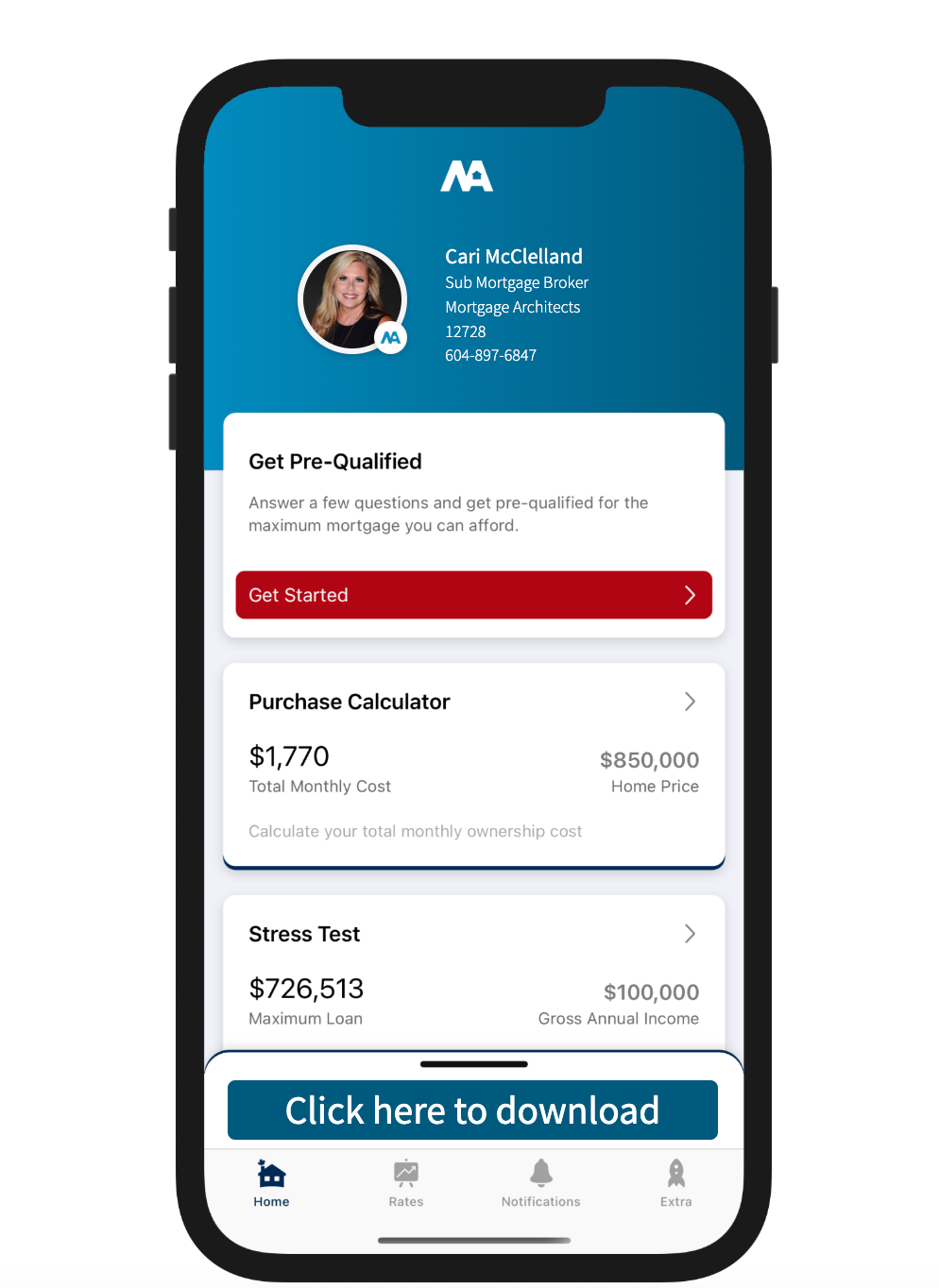
DOWNLOAD APP

Let's Run Some Numbers

Mortgage articles to keep you informed.

By Cari McClelland February 25, 2026
Your Guide to Real Estate Investment in Canada Real estate has long been one of the most popular ways Canadians build wealth. Whether you’re purchasing your first rental property or expanding an existing portfolio, understanding how real estate investment works in Canada—and how it’s financed—is key to making smart decisions. This guide walks through the fundamentals you need to know before getting started. Why Canadians Invest in Real Estate Real estate offers several potential benefits as an investment: Long-term appreciation of property value Rental income that can support cash flow Leverage , allowing you to invest using borrowed funds Tangible asset with intrinsic value Portfolio diversification beyond stocks and bonds When structured properly, real estate can support both income and long-term net worth growth. Types of Real Estate Investments Investors typically focus on one or more of the following: Long-term residential rentals Short-term or vacation rentals (subject to local regulations) Multi-unit residential properties Pre-construction or assignment purchases Value-add properties that require renovations Each type comes with different financing rules, risks, and return profiles. Down Payment Requirements for Investment Properties In Canada, investment properties generally require higher down payments than owner-occupied homes. Typical minimums include: 20% down payment for most rental properties Higher down payments may be required depending on: Number of units Property type Borrower profile Lender guidelines Down payment source, income stability, and credit history all play a role in approval. How Rental Income Is Used to Qualify Lenders don’t always count 100% of rental income. Depending on the lender and mortgage product, they may: Use a rental income offset , or Include a percentage of rental income toward qualification Understanding how income is treated can significantly impact borrowing power. Financing Options for Investors Investment financing can include: Conventional mortgages Insured or insurable options (in limited scenarios) Alternative or broker-only lenders Refinancing equity from existing properties Purchase plus improvements for value-add projects Access to multiple lenders is often crucial for investors as portfolios grow. Key Costs Investors Should Plan For Beyond the purchase price, investors should budget for: Property taxes Insurance Maintenance and repairs Vacancy periods Property management fees (if applicable) Legal and closing costs A realistic cash-flow analysis is essential before buying. Risk Considerations Like any investment, real estate carries risk. Key factors to consider include: Interest rate changes Market fluctuations Tenant turnover Regulatory changes Liquidity (real estate is not easily sold quickly) A strong financing structure can help manage many of these risks. The Role of a Mortgage Professional Investment mortgages are rarely “one-size-fits-all.” Lender policies vary widely, especially as you acquire more properties. Working with an independent mortgage professional allows you to: Compare multiple lender strategies Structure financing for long-term growth Preserve flexibility as your portfolio evolves Avoid costly mistakes early on Final Thoughts Real estate investment in Canada can be a powerful wealth-building tool when approached with a clear strategy and proper financing. Whether you’re exploring your first rental property or planning your next acquisition, understanding the numbers—and the lending landscape—matters. If you’d like to discuss investment property financing, run the numbers, or explore your options, feel free to connect. A well-planned mortgage strategy can make all the difference in long-term success.
By Cari McClelland February 18, 2026
Buying your first home is a big deal. And while you may feel like you’re ready to take that step, here are 4 things that will prove it out. 1. You have at least 5% available for a downpayment. To buy your first home, you need to come up with at least 5% for a downpayment. From there, you’ll be expected to have roughly 1.5% of the purchase price set aside for closing costs. If you’ve saved your downpayment by accumulating your own funds, it means you have a positive cash flow which is a good thing. However, if you don’t quite have enough saved up on your own, but you have a family member who is willing to give you a gift to assist you, that works too. 2. You have established credit. Building a credit score takes some time. Before any lender considers you for mortgage financing, they want to see that you have an established history of repaying the money you’ve already borrowed. Typically two trade lines, for a period of two years, with a minimum amount of $2000, should work! Now, if you’ve had some credit issues in the past, it doesn’t mean you aren’t ready to be a homeowner. However, it might mean a little more planning is required! A co-signor can be considered here as well. 3. You have the income to make your mortgage payments. And then some. If you’re going to borrow money to buy a house, the lender wants to make sure that you have the ability to pay it back. Plus interest. The ideal situation is to have a permanent full-time position where you’re past probation. Now, if you rely on any inconsistent forms of income, having a two-year history is required. A good rule of thumb is to keep the costs of homeownership to under a third of your gross income, leaving you with two-thirds of your income to pay for your life. 4. You’ve discussed mortgage financing with a professional. Buying your first home can be quite a process. With all the information available online, it’s hard to know where to start. While you might feel ready, there are lots of steps to take; way more than can be outlined in a simple article like this one. So if you think you’re ready to buy your first home, the best place to start is with a preapproval! Let's discuss your financial situation, talk through your downpayment options, look at your credit score, assess your income and liabilities, and ultimately see what kind of mortgage you can qualify for to become a homeowner! Please connect anytime; it would be a pleasure to work with you!
By Cari McClelland February 11, 2026
If you’re looking to do some home renovations but don’t have all the cash up front to pay for materials and contractors, here are a few ways to use mortgage financing to bring everything together. Existing Home Owners - Mortgage Refinance Probably the most straightforward solution, if you’re an existing homeowner, would be to access home equity through a mortgage refinance. Depending on the terms of your existing mortgage, a mid-term mortgage refinance might make good financial sense; there’s even a chance of lowering your overall cost of borrowing while adding the cost of the renovations to your mortgage. As your financial situation is unique, it never hurts to have the conversation, run the numbers, and look at your options. Let’s talk! If you're not in a huge rush, it might be worth waiting until your existing term is up for renewal. This is a great time to refinance as you won’t incur a penalty to break your existing mortgage. Now, regardless of when you refinance, mid-term or at renewal, you’re able to access up to 80% of the appraised value of your home, assuming you qualify for the increased mortgage amount. Home Equity Line of Credit Instead of talking with a bank about an unsecured line of credit, if you have significant home equity, a home equity line of credit (HELOC) could be a better option for you. An unsecured line of credit usually comes with a pretty high rate. In contrast, a HELOC uses your home as collateral, allowing the lender to give you considerably more favourable terms. There are several different ways to use a HELOC, so if you’d like to talk more about what this could look like for you, connect anytime! Buying a Property - Purchase Plus Improvements If you’re looking to purchase a property that could use some work, some lenders will allow you to add extra money to your mortgage to cover the cost of renovations. This is called a purchase plus improvements. The key thing to keep in mind is that the renovations must increase the value of the property. There is a process to follow and a lot of details to go over, but we can do this together. So if you’d like to discuss using your mortgage to cover the cost of renovating your home, please connect anytime!
By Cari McClelland February 25, 2026
Your Guide to Real Estate Investment in Canada Real estate has long been one of the most popular ways Canadians build wealth. Whether you’re purchasing your first rental property or expanding an existing portfolio, understanding how real estate investment works in Canada—and how it’s financed—is key to making smart decisions. This guide walks through the fundamentals you need to know before getting started. Why Canadians Invest in Real Estate Real estate offers several potential benefits as an investment: Long-term appreciation of property value Rental income that can support cash flow Leverage , allowing you to invest using borrowed funds Tangible asset with intrinsic value Portfolio diversification beyond stocks and bonds When structured properly, real estate can support both income and long-term net worth growth. Types of Real Estate Investments Investors typically focus on one or more of the following: Long-term residential rentals Short-term or vacation rentals (subject to local regulations) Multi-unit residential properties Pre-construction or assignment purchases Value-add properties that require renovations Each type comes with different financing rules, risks, and return profiles. Down Payment Requirements for Investment Properties In Canada, investment properties generally require higher down payments than owner-occupied homes. Typical minimums include: 20% down payment for most rental properties Higher down payments may be required depending on: Number of units Property type Borrower profile Lender guidelines Down payment source, income stability, and credit history all play a role in approval. How Rental Income Is Used to Qualify Lenders don’t always count 100% of rental income. Depending on the lender and mortgage product, they may: Use a rental income offset , or Include a percentage of rental income toward qualification Understanding how income is treated can significantly impact borrowing power. Financing Options for Investors Investment financing can include: Conventional mortgages Insured or insurable options (in limited scenarios) Alternative or broker-only lenders Refinancing equity from existing properties Purchase plus improvements for value-add projects Access to multiple lenders is often crucial for investors as portfolios grow. Key Costs Investors Should Plan For Beyond the purchase price, investors should budget for: Property taxes Insurance Maintenance and repairs Vacancy periods Property management fees (if applicable) Legal and closing costs A realistic cash-flow analysis is essential before buying. Risk Considerations Like any investment, real estate carries risk. Key factors to consider include: Interest rate changes Market fluctuations Tenant turnover Regulatory changes Liquidity (real estate is not easily sold quickly) A strong financing structure can help manage many of these risks. The Role of a Mortgage Professional Investment mortgages are rarely “one-size-fits-all.” Lender policies vary widely, especially as you acquire more properties. Working with an independent mortgage professional allows you to: Compare multiple lender strategies Structure financing for long-term growth Preserve flexibility as your portfolio evolves Avoid costly mistakes early on Final Thoughts Real estate investment in Canada can be a powerful wealth-building tool when approached with a clear strategy and proper financing. Whether you’re exploring your first rental property or planning your next acquisition, understanding the numbers—and the lending landscape—matters. If you’d like to discuss investment property financing, run the numbers, or explore your options, feel free to connect. A well-planned mortgage strategy can make all the difference in long-term success.
By Cari McClelland February 18, 2026
Buying your first home is a big deal. And while you may feel like you’re ready to take that step, here are 4 things that will prove it out. 1. You have at least 5% available for a downpayment. To buy your first home, you need to come up with at least 5% for a downpayment. From there, you’ll be expected to have roughly 1.5% of the purchase price set aside for closing costs. If you’ve saved your downpayment by accumulating your own funds, it means you have a positive cash flow which is a good thing. However, if you don’t quite have enough saved up on your own, but you have a family member who is willing to give you a gift to assist you, that works too. 2. You have established credit. Building a credit score takes some time. Before any lender considers you for mortgage financing, they want to see that you have an established history of repaying the money you’ve already borrowed. Typically two trade lines, for a period of two years, with a minimum amount of $2000, should work! Now, if you’ve had some credit issues in the past, it doesn’t mean you aren’t ready to be a homeowner. However, it might mean a little more planning is required! A co-signor can be considered here as well. 3. You have the income to make your mortgage payments. And then some. If you’re going to borrow money to buy a house, the lender wants to make sure that you have the ability to pay it back. Plus interest. The ideal situation is to have a permanent full-time position where you’re past probation. Now, if you rely on any inconsistent forms of income, having a two-year history is required. A good rule of thumb is to keep the costs of homeownership to under a third of your gross income, leaving you with two-thirds of your income to pay for your life. 4. You’ve discussed mortgage financing with a professional. Buying your first home can be quite a process. With all the information available online, it’s hard to know where to start. While you might feel ready, there are lots of steps to take; way more than can be outlined in a simple article like this one. So if you think you’re ready to buy your first home, the best place to start is with a preapproval! Let's discuss your financial situation, talk through your downpayment options, look at your credit score, assess your income and liabilities, and ultimately see what kind of mortgage you can qualify for to become a homeowner! Please connect anytime; it would be a pleasure to work with you!
By Cari McClelland February 11, 2026
If you’re looking to do some home renovations but don’t have all the cash up front to pay for materials and contractors, here are a few ways to use mortgage financing to bring everything together. Existing Home Owners - Mortgage Refinance Probably the most straightforward solution, if you’re an existing homeowner, would be to access home equity through a mortgage refinance. Depending on the terms of your existing mortgage, a mid-term mortgage refinance might make good financial sense; there’s even a chance of lowering your overall cost of borrowing while adding the cost of the renovations to your mortgage. As your financial situation is unique, it never hurts to have the conversation, run the numbers, and look at your options. Let’s talk! If you're not in a huge rush, it might be worth waiting until your existing term is up for renewal. This is a great time to refinance as you won’t incur a penalty to break your existing mortgage. Now, regardless of when you refinance, mid-term or at renewal, you’re able to access up to 80% of the appraised value of your home, assuming you qualify for the increased mortgage amount. Home Equity Line of Credit Instead of talking with a bank about an unsecured line of credit, if you have significant home equity, a home equity line of credit (HELOC) could be a better option for you. An unsecured line of credit usually comes with a pretty high rate. In contrast, a HELOC uses your home as collateral, allowing the lender to give you considerably more favourable terms. There are several different ways to use a HELOC, so if you’d like to talk more about what this could look like for you, connect anytime! Buying a Property - Purchase Plus Improvements If you’re looking to purchase a property that could use some work, some lenders will allow you to add extra money to your mortgage to cover the cost of renovations. This is called a purchase plus improvements. The key thing to keep in mind is that the renovations must increase the value of the property. There is a process to follow and a lot of details to go over, but we can do this together. So if you’d like to discuss using your mortgage to cover the cost of renovating your home, please connect anytime!